Tuesday, February 21, 2012

Champions League Round of 16 - Real Held in Moscow, Napoli's Blue Crush


Here are some of my thoughts on tonight’s two Champions League matches…

Real Madrid @ CSKA Moscow (first leg: 1-1)

Although Real conceded a goal to 25-year-old Sweden international Pontus Wernbloom (who has arguably one of the better names in football) at the death, this has to be viewed as a positive result for the nine-time European champions.

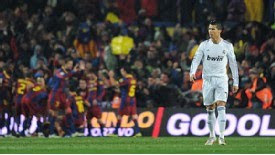
Jose Mourinho’s men took the lead in the 28th minute after CSKA’s horrible attempt at clearing the ball, which allowed Cristiano Ronaldo—who else?—to find the back of the net with a well struck shot off his weak foot that beat goalkeeper Sergei Chepchugov, who was forced to stand on his head more than once in Moscow tonight.

Mourinho supporters will remember his Inter squad that came to the Luzhniki Stadium two years ago up 1-0 on aggregate after the first leg of the 2009-10 Champions League quarter-finals, and doubling their lead before advancing to the semi-finals—en route to their historic treble-winning season—thanks to a lucky Wesley Sneijder strike. Inter did not concede a goal over their tie with CSKA that year, and while Real already have thanks to the Swede’s late-game heroics (something CSKA has shown a real affinity for in Europe’s premier tournament in recent years, actually), don’t expect them to do so in the return leg three weeks from tomorrow. However slim the Russian side’s chances are of pulling off a miracle at the Bernabeu, though, CSKA boss Leonid Slutsky should be extremely proud of his club’s hard-fought effort tonight against superior opposition in front of just over 70,000 spectators.

Real Madrid currently sit a whopping ten points ahead of Barcelona atop La Liga, and will surely move on to this year’s Champions League quarter-finals, but you start to get the feeling that a double-winning season will have an air of incompleteness about it unless the club proves that it can defeat Barcelona…like that’s ever going to happen.

 Chelsea @ Napoli (first leg: 3-1 Napoli)

This one, for whatever reason, reminded me a lot of this year’s Super Bowl. I am not a New England fan—and never will be—but I know that the vast majority of my friends who are told me they weren’t the least bit surprised when their precious Patriots fell to the Giants (again).

I am, however, a Chelsea fan, and sadly, I share the same sentiments of my New England adversaries tonight.

This result was to be expected, was it not? The horrid run Chelsea has been on. Their highly questionable backline. The fact that Napoli is just a hungrier club at the moment. All three of these factors—and surely dozens more—conspired and brought down the mighty Blues in southern Italy this evening, and once again put a giant dent in their Champions League title hopes. But it was all too predictable.

The only thing that really surprised me was the fact that over 82% of people who had submitted a pick for the match on ESPN.com’s Streak for the Cash had elected a Chelsea win over a Napoli win…or draw (I chose the latter and can now boast a proud two-game winning streak with eight days left in the month).

Clearly these people hadn’t been paying attention to how Chelsea actually plies their trade these days.


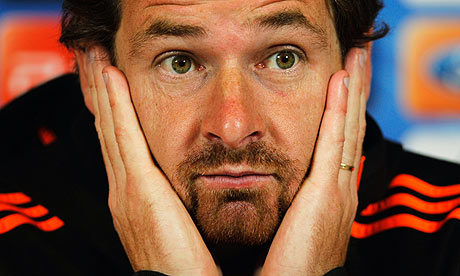
The team is completely different than in years past, and it is becoming more and more evident with each passing fixture just how clueless, helpless, and unsuited manager Andre Villas-Boas is for his current post.

The backline acted almost as a parody of itself with David Luiz leading the way committing his usual comedy of errors, all of which contributed to the three Napoli goals. Chelsea created some chances, but they looked like a dispirited bunch for much of the night, quite the contrary to what we’ve all grown so accustomed to seeing over the past half decade. The most egregious act of the evening, however, was found on AVB’s lineup card.

Why Michael Essien, Ashley Cole, and Frank Lampard—three Chelsea legends who have enjoyed unparalleled success in Europe compared to most of their teammates—were all left out of the starting XI for what was obviously the club’s most important match of the season yet is both baffling and downright inexcusable.

It’s almost as if AVB is trying to get sacked. He is on thin ice as it is—that is no secret—and there’s no telling when that ice might finally crack, but if the Portuguese is still around in three weeks for the return leg at Stamford Bridge and still wants to keep his job, he will put his grand, revolutionary plans aside for 90 minutes and give the club a fresh injection of veteran experience (an oxy-moron if I ever heard one) and leadership and hope for the best. That means starting Essien and Lampard, Drogba and Torres (Yes. Together.), and maybe even Salomon Kalou. Chelsea is not the formidable European side they’ve been in years past, but they’ve scored more than a couple goals at home before. Maybe a desperate, last-second return to the club’s golden era can salvage a Champions League campaign that may have already reached yet another abrupt and premature ending. I can’t believe I’m saying this, but I almost miss Nicolas Anelka…almost.

A quick word on Napoli: their front three of Ezequiel Lavezzi, Marek Hamsik, and the ferociously indomitable Edinson Cavani is as good as they come. The trio talked the talk before Tuesday night’s showdown, and then more than walked the walk tonight in the chances they both created and converted. An Argentine, a Slovak, and a Uruguayan, it turns out, form a perfect triangle.

Monday, February 20, 2012

AVB - We Hardly Knew Thee?

It was a simple question directed to Andre Villas-Boas at a recent press conference in the week leading up to Chelsea’s FA Cup Fifth Round tie against Birmingham on Sunday:

“How strong is the desire within the squad now to win either the FA Cup or the Champions League given that you aren’t going to win the [Premiership]?”

Football managers are bombarded by these types of questions on an almost daily basis during any one season, so much so in fact that it becomes easier and easier to predict the coach’s response as the year rolls on. If you had asked me to forecast Villas-Boas’ response to this particular query, I probably would have guessed that he’d say something like this:

“The team is still training hard. It is February. The Premiership is not over until May. We will continue to work hard and try to win all that we can before the end of the season.”

An answer like this is as obvious (and as trite) as they come when faced with this type of questioning. This member of the press—he’s certainly not alone though—had clearly written off Chelsea’s chances of winning the Premier League, and was inquiring to determine the level of the club’s overall ambition in said tournaments, stirring the proverbial pot, which is the job of journalists and commentators alike.

The manager’s job, of course, is to then deflect and ward off these oncoming questions and assertions by retorting in a way that will not only refute these claims, but that will also re-instill a sense of hope and optimism into not only the club, but its supporters as well. It is, once again, the obvious thing for a manager to do.

But Villas-Boas is unlike most managers, and not solely because of his precocious pedigree. No, AVB’s ever-increasing frustration at Stamford Bridge has been well-documented in the eight months since he joined Chelsea back in June, and following a particularly dismal run of form that has seen the Blues go winless since January 28, there has been nary a smile to be seen on the manager’s face for weeks.

So when Villas-Boas was asked the aforementioned question, instead of replying rather banally but positively, he glared at the inquirer and might as well have brandished a small white flag in lieu of his crestfallen, but candid, response:

“Not as strong as before,” he conceded.

AVB could have said Chelsea isn’t finished yet. He could have said we’re still alive in two hugely important tournaments that we think we can win. He could have said we still have loads more quality than most teams in these tournaments.

He could have said all these things and more in a last-ditch effort to reinvigorate the squad and its fan base and, in so doing, give everyone in West London a little boost of hope.

But he didn’t. It wouldn’t have been genuine, and it wouldn’t have been the truth.

The truth is that Chelsea are in shambles. The last time they won a match came three weeks ago in an unconvincing 1-0 victory over QPR in the FA Cup Fourth Round, and the last time they won a Premiership match was another pallid 1-0 triumph against Sunderland over a month ago on January 14. Since, they have lost just once (a 2-0 drubbing away to Everton) but were unable to score against Norwich, blew a 3-0 second half lead at home to Manchester United, and were nearly knocked out of the FA Cup at home to Birmingham on Sunday. It doesn’t help that the club will travel to Napoli next to take on the club nobody wants to play in tomorrow’s first leg of the Champions League’s round of 16.

There are rumors swirling about that the Chelsea players have lost faith in Villas-Boas and AVB’s aforesaid comments do little to dispel those rumblings. And it is no secret that if this unacceptable run of form continues, Villas-Boas could soon be packing his bags before his revolutionary project is barely underway.

There have been a few players who have come to AVB’s defense such as striker Didier Drogba. But with the Ivory Coast international’s contract expiring at season’s end and there being little speculation of its renewal, how difficult must it have been for Drogba to publicly back his manager? Especially when you consider the fact that he had been away at the Africa Cup of Nations for the last month, which has proven to be—perhaps not coincidentally—the most tumultuous chapter of Chelsea’s season thus far.

Perhaps Chelsea hired the wrong man for the job when they signed Villas-Boas as manager.

Perhaps the 34-year-old needed more time to develop in an authoritative roll, despite winning the treble with Porto last season.

Perhaps Chelsea saw a little too much of Mourinho in AVB, though results—not to mention overall demeanor—in each Portuguese’ first season at Stamford Bridge have clearly shown they are not as similar as some might have originally believed them to be.

Or perhaps the real problem here is the culture of impatience that has been created at the club by owner Roman Abramovich. Not including Mourinho, who left Chelsea by mutual consent in the fall of 2007, the Blues have had five different managers since the Special One’s departure, and only one of them (Carlo Ancelotti) has lasted longer than one season in charge. It has reached a point where being fired by Abramovich has become almost a rite of passage for Chelsea managers and Villas-Boas surely realizes his days in West London could very well be numbered if results don’t improve. The players undoubtedly realize this, too, and it is they, perhaps more so now than the manager, who have the power to control those results.

Villas-Boas can breathe a momentary sigh of relief now that Guus Hiddink—an Abramovich favorite—has inked a new contract to manage Russian side Anzhi Makhachkala. But the manager’s career at Chelsea will undeniably be on the line against Napoli.

Should the Blues advance, AVB may yet retain his job. It will, of course, depend on how much farther he can push his ageing side in football’s prize tournament. Should the Blues fail to progress (and following Arsenal’s recent performance in Italy, it doesn’t look promising), however, AVB will surely be shown the exit and make way for the next dead manager walking at Stamford Bridge.

So it will all come down to tomorrow (and then in the return leg on March 14—if AVB survives that long, and if the thrashing in the first leg isn’t too severe, that is) against Napoli for Andre Villas-Boas. Will his discontented squad rise out of the ashes and put on a clinical, vintage Chelsea performance in Tuesday’s first leg that will give the club a fighting chance to survive? Or will they continue to play uninspired football and keep looking over their shoulders for a new boss in whom they can trust and believe to suddenly appear?

It will be up to AVB. But, it will also be up to his team.

Monday, September 12, 2011

Apologies, but not to Fernando Torres


WEEK 1

I guess I’ll start with a profuse apology to all of my followers—mostly because there’s so many of you (last time I checked I had two)—for taking nearly five months to put up another post. The most recent one—from April 9, 2011—reads: Granada CF: Spanish Soccer’s Story of the Year. El Grana have since been promoted to La Liga—their first season in the top tier in 35 years—following one of the luckier playoff round runs in Spanish history. That’s the good news. The bad news is that Granada currently finds themselves at the bottom of the table due to back-to-back losses to Real Betis, and a 4-0 shellacking by newly rich Malaga just a few hours ago. Fabri Gonzalez’s team remains just one of three squads in La Liga who are goalless. Not exactly story-of-the-year caliber stuff.

No need to despair though. In my experience, teams that play in the city or general area in which I studied abroad slash lived and taught English last year tend to do very well the following season (I did all three in Granada, which is in Spain, and the winner of the Champions League both times was Barcelona…which is also in Spain. There. I proved it. Granada will be fine…gulp).

But let’s have at it, shall we? Here are some quick thoughts from the weekend.

FRONT FIVE

1) Sergio Aguero - Anyone who is still skeptical about how the 23-year-old wiz kid will fare at the Etihad Stadium this year after his £35 million move from Atletico Madrid this summer obviously hasn’t been paying attention to all-things Eastlands. The diminutive striker lit it up again this weekend bagging all three goals for the Citizens in Manchester City’s 3-0 drubbing of Wigan on Saturday, giving him six total for the year. And it’s September. Kun’s performances this season have been nothing short of magical, and I’m extremely proud to say that this young man is almost a year younger than me. Glad I put in all that time to practice after school when I was a kid!

2) Danny Sturridge – It might be a little premature to start talking about goal of the year, and while the 22 year old’s first of the campaign against Sunderland probably won’t win the award, pundits alike will struggle to find a more impressive finish in the Premier League this season. Chelsea won the game 2-1, Sturridge is proving to be a huge bargain, and Fernando Torres still has scored just once since his £50 million transfer from Liverpool last winter. All is well at Stamford Bridge.

3) Franck Ribery – He’ll forgive those of you who just assumed he fell off the face of the Earth last year after enduring a tumultuous, injury-riddled campaign at the Allianz Arena. But the Frenchman was back in a big way this weekend, scoring twice and setting up Mario Gomez for one of his four strikes in Bayern Munich’s 7-0 demolition of Freiberg. Teammate Arjen Robben enjoyed the thumping from the stands, as he is still recovering from a groin injury, but it should be a lot of fun for the rest of the vastly inferior Bundesliga outfits when the dynamic Dutchman returns to an already indomitable Bavarian side.

4) The Agnelli Family – It might come as a shock to all of you, but Agnelli is in fact an Italian name. Juventus’ owners invested a whopping €86 million on new players this summer, and the lavish expenditures paid immediate dividends on Sunday in the club’s 4-1 home victory over Parma. Newcomers Stephen Lichtsteiner, Simone Pepe, and Arturo Vidal all found the back of the net, which injected some life into the Old Lady. Yeah, that’s Juventus’ nickname: the Old Lady.

5) Real Sociedad – I have never made a toast to Royal Society before, but the time do that has never been more appropriate. Playing at home to Barcelona on Saturday, the Basque side that barely escaped relegation last season rallied from a two-goal deficit—following back-to-back strikes in the first eleven minutes, mind you—and somehow managed to even the score at two before time elapsed at the Anoeta. The draw, which has come to be known as the new loss for Barcelona, might turn out to be the only fixture in which Pep Guardiola’s squad actually drops points this year, and if so, I suppose it’s fitting that a Real had a hand in it.

All-Cool -Do

Raul Meireles – If you think I’m more excited about the 28-year-old midfielder’s distributing prowess, you’re dead wrong.

All-Cool Number

99 – Now worn by Lazio’s Djibril Cisse, Milan’s Antonio Cassano, and most recently by Anzhi Makhachkala’s (one of the easier Russian club names to pronounce) pricy new boy, Samuel Eto’o. It’s not the most orthodox of soccer numbers for the back of a shirt, but that’s exactly why these men have chosen it. Or maybe they all just really like Wayne Gretzky, Warren Sapp and restaurant popcorn.

All-Cool Quote

He's different from Messi and Cristiano Ronaldo because they are strikers and score a lot of goals but I think he's the same as Xavi and Iniesta." – Manchester City manager Roberto Mancini on his talismanic midfielder David Silva.

To be clear though, David Silva is not—and I cannot emphasize this point enough—is NOT the same person as Xavi Hernandez and Andres Iniesta. Xavi is one person. Iniesta another. And David Silva another. Shame on you for thinking they were the same person, Roberto.

All-Cool Headline

Joaquin the Park: Malaga dismantle Granada 4-0 in home opener


Take A Seat, Pal

Fernando Torres – The £50 million man who has scored just one goal in 18 appearances for Chelsea was left on the bench Saturday—shocker—in favor of Danny Sturridge who scored the game-winner; Torres is in the process—a process that may already be done—of losing his job on the Spanish national team to a younger Alvaro Negredo; and now El Nino is being investigated for disparaging comments he allegedly made in a recent interview about his Chelsea teammates, calling some of them “older” and “very slow,” which he blames for his severe scoring drought since joining the club. Torres has denied making the criticisms, asserting that he was mistranslated, but head coach Andre Villas-Boas is still keen on getting to the bottom of everything.

No matter what happens in all of this mess, can all of us just agree that Fernando Torres is already running the risk of becoming one of the biggest flameouts in history—not just in sports; in anything—and that by the time the next transfer window arrives he could find himself plying his trade elsewhere and marked as the single largest walking waste of money the world of soccer has seen (as if that already isn’t the case) since…well…he would be it! These comments have no place or tact, Fernando. We’re sorry you miss Xabi Alonso so much, but with the ever-changing personnel that all soccer teams—at both club and international level—undergo year after year, isn’t the one characteristic inherent in all great soccer players their ability to adapt to new surroundings, to new players?

As a wise man once said: work with what you have, not with what you want. Maybe one day, Torres will come to appreciate that. But for now, to all those Blues officials who are set on investigating Torres’ controversial interview, a little word of advice: “Odio a Chelsea” is Spanish for “I hate Chelsea.”

Saturday, April 9, 2011

Granada CF: Spanish Soccer's Story of the Year


It would be difficult for one to argue that there is a more intriguing storyline this year in Spanish soccer than the (inevitable) dogfight between Barcelona and Real Madrid.

It would be even tougher for one to argue this claim with the very likely possibility of the two foes squaring off four times in just 17 days starting April 17th.

I’m going to make the argument anyway.

Granada CF, a club founded in 1931 under the direction of President Julio Lopez Fernandez, is the Spanish soccer story of the year.

Playing this season in the respectable confines of the Segunda Division, the club who originally plied its trade as Recreativo de Granada, has seemingly risen out of the depths of the Iberian abyss and is rapidly approaching the potential climax to what has been a dramatic and unexpected resurgence these past few years.

The history of Granada CF is a humble one.

After its initial promotion to La Liga back in 1941, the club has been back to the top-tier of Spanish soccer just three times since, the most recent of these seasons coming in 1975-76 when the club was ultimately relegated.

Their highest finish in La Liga is sixth, they have never won the King’s Cup, and only five years ago the club found itself in the lowly depths of the Tercera Division, the dismal fourth-tier of Spanish soccer.

Heck, when I first arrived in Granada to study abroad some two-and-a-half years ago and inquired about whether the city had a local soccer team, my program’s leader chortled.

“Yes,” he informed me, “but they’re very bad.”

Flash forward to this season and it’s evident El Graná is writing a very different story.

Led by Spanish midfielder Dani Benitez, Swiss forward Alexandre Geijo—currently tied for the league lead in goals with 20—and Ghanian defender Jonathan Mensah, who started for the Black Stars against the United States at last summer’s World Cup, the team that traditionally has always been so accustomed to packing its bags for the division below at season’s end can suddenly smell promotion’s sweet scent.

Despite a pallid run of form that’s seen the club go winless in its last five games, manager Fabriciano Gonzalez’s squad still finds itself seventh in the league table—a mere point behind this Sunday’s opponents Cartagena—with 11 matches to go.

And with the league’s top two teams guaranteed promotion at the season’s conclusion and clubs three through six set to battle it out for the decisive third promotion spot in a pair of two-legged semifinals as well a two-legged final, Granada appears to be in good shape to make the playoffs.

Especially when you consider that Barcelona B sits currently in fourth but can never secure promotion to La Liga as they are FC Barcelona’s reserve team, hence currently rendering Granada as the actual sixth team in Segunda.


That still might seem like a stretch for a club that hasn’t played in Spain’s top-flight division for nearly a quarter of a century. Nevertheless, the city and Granada’s followers are more abuzz than they have been in years.

One of the club’s more ardent supporters is Javier Jimenez, the headmaster at CEIP Victoria, a primary school not far from Granada where I have had the pleasure of working as a Language and Culture Assistant this year while living in the city proper. He knows why I am in his office today, and he’s all too eager to discuss all things CF.

With one of the most enthusiastic expressions I have ever seen on the face of a school president, in Spanish he regales me about the history of Granada’s most famous soccer club.
He explains to me how CF was responsible for creating the red vertically-striped shirts worn nowadays by Atletico Madrid (Granada wears red horizontally-striped shirts, much like those of Major League Soccer’s FC Dallas, a point that Jimenez duly notes) thanks to a factory error.
He goes on to say why there are presently 11 players at the club including the aforementioned trio of Benitez, Geijo and Mensah who are on loan from Italian outfit Udinese (both club presidents are good friends).

He also mentions the sheer amount of agonizing pain that comes with being a Granada supporter and how he has been a season ticket holder nearly all his life.

“When I was growing up, my [older] brother had a season pass and whenever he couldn’t go, I went,” says Jimenez, grinning from ear to ear.

“Now, every weekend I take my son,” he states proudly flipping open his cell phone and showing me a picture of himself with 16-year-old Fernando, the two decked head to toe in CF gear at Granada’s Estadio Nuevo Los Carmenes.

From the ebullient manner in which he talks about CF, it’s clear that Jimenez has a special place in his heart for Granada. But like any Spanish soccer fan whose true loyalty lies with a club that isn’t Real Madrid or Barcelona, the backing of their local “inferior” organization seems futile as the two giants typically reign supreme over all with each passing year.

It is therefore commonplace for Spaniards to root for either Real or Barça in addition to supporting their local club, and Jimenez confirms this notion poignantly.

“I have one team to enjoy, and another to suffer by,” he tells me with a chuckle, alluding firstly to Real.

Prior to our meeting in his office, I had only ever heard my boss discuss soccer’s current events pertaining solely to Real Madrid, so I had to pose the obvious question: Real or Granada?

“Granada,” he interjects before I can even finish the question. “I don’t usually cry, but last June when they won promotion to Segunda, I had tears pouring down my face.”

Surely, the sentiment in Granada and its surrounding towns mirrors that of Javier, and the city itself has made evident its bourgeoning passion for the beautiful game and its local club in recent times.


This past weekend Los Carmenes was the host of an entertaining and successful Euro 2012 qualifier between Spain and the Czech Republic, a match that La Roja won 2-1 and saw David Villa surpass Raul as his country’s all-time leading scorer.

There are already plans to add at least 4,000 more seats to the stadium’s diminutive 16,000+ size should Granada make La Liga.

There are posters at almost every bus stop in the city promoting its local soccer team with a limited edition Granada CF bottle from the neighborhood brewery Alhambra, whose beers are named after the majestic Moorish fortress that overlooks the city.

When I ask Jimenez what it would mean to him personally if Granada were to make La Liga at season’s end he responds in English:

“A heart attack!” he cracks, howling with laughter.

The optimism and excitement exuded by Jimenez and his contingent of local supporters is palpable throughout the city and is perhaps best expressed in the red and white tagline accompanying the illustrations of the Granada CF bottle and team logo on the Alhambra posters: Un año mas seguimos soñando juntos. One more year we continue to dream together.

For the city of Granada and its clubs supporters, dreaming might not be necessary for very much longer.

Sunday, February 6, 2011

FC Barcelona Legends: Ranking the Top 10 All-Time Barça Players

When you’re dealing with the best club in the world, compiling any list of rankings is difficult. Now try compiling that same list, but having to sift through the entire comprehensive and illustrious history of that club, as well as each and every person that ever threw on the Barcelona uniform. That is precisely the task that I recently undertook, and while this list of the Top 10 All-Time Barça Players might not be perfect, it’ll have to do for now.

10. Rivaldo

Although he was poached from Deportivo de La Coruña back in 1997 for a cool 4000 million pesetas (about €19.5 million), the Brazilian still left an indelible mark on the club for which he played six seasons from 1997-2002. The attacking midfielder, who became the first of many players whose surname terminated in “o” to shine at the Nou Camp, tallied an impressive 130 goals in all competitions during his Barça career and in 1999, won both the FIFA World Player of the Year Award and Ballon d'Or in guiding the Catalans to the La Liga title.

His career-defining moment at Barcelona came back in 2001 in the last game of the season against Valencia. In a 3-2 victory, Rivaldo secured a hat trick with an astounding bicycle kick from outside the box in the 90th minute that found the back of the net and sent the home supporters into an unbridled frenzy. Not only did the mesmerizing strike give the club a victory, but it also guaranteed Barcelona a spot in the following season’s UEFA Champions League. Oh, and it was also Rivaldo’s 36th goal of the year: a season-best for the Brazilian attacker.

9. César

Uhhhh….who? The man whose birth certificate read César Rodríguez Álvarez, but who opted to be called by the singular praenomen, played for Barcelona in what might appropriately be referred to as the olden days (1939-1955), and amassed a supersized total of 235 goals in 351 games for the Blaugranes making him the club’s all-time leading scorer to date. Yes, the game was much different back then, and yes, in 1999 a fan's poll declared teammate László Kubala to be the best player to ever suit up for the Catalans, but you can’t formulate a list of the best players in Barcelona history without including their top scorer….can you?

8. Pep Guardiola

The slender, Santpedor-born defensive midfielder served as the backbone of then manager Johan Cruyff’s Dream Team that won four straight La Liga titles from 1991-1994, including the double in 1992—the year the club captured its first ever European Cup when Guardiola was just 20 years old (he contributed significantly to the club’s second run at a European crown, too, when they lost to Milan 4-0 in the ’94 Final).

Being the current manager of the club at which he thrived during his playing days ensures that his legend at Barcelona will continue to grow, albeit from the sideline. But hearing players like Xavi Hernández and Andrés Iniesta admit that Guardiola was their hero and a role model growing up, and then watching them strive to emulate their manager’s former style of play on the pitch week in and week out suggests that Pep the player’s influence at Barcelona has been both contagious and interminable; surely, without those two players, Barça would be far worse off.

7. Carles Puyol

The man who looks more like a golden retriever than a footballer has captained Barcelona for the last seven years and just might be the best defender in club history. The 32-year-old center back has been the undisputed leader of one of the most impermeable back lines in Europe since being handed the armband back in 2004 and has four La Liga titles (2004-05, 2005-06, 2008-09, 2009-10) and two European Cups (2006, 2009) to show for it. And if the 5-0 thrashing of Real Madrid is any indication of how the rest of this season will play out, one more of each trophy could be on the way. It’s difficult to cement Puyol’s ranking on this list, seeing as how his career at the club is still on-going, and he is a defender—a position that is often overlooked—but make no mistake: no one is better suited to be the skipper of the world’s greatest football club. We’ll keep him at number seven…for now.

6. Andrés Iniesta

Another active player whose exact ranking on this list was tough to determine, AI8 is already one of Barcelona’s greatest midfielders ever, despite his still tender age of 26. Though hampered by injuries that limited him to just twenty starts last season, Iniesta capped off the 2009-10 campaign with the game-winning goal for Spain at the 2010 World Cup Final, and there are few that believe Barça’s 5’7” talisman is on the downward slope of his career. With shots like the last one fired in South Africa, and the one two seasons ago at Stamford Bridge—which knocked Chelsea out of UEFA Champions League Semifinals from 11 meters out—surely, he is still on his way up.

We must also remember that had Iniesta not made his crucial shot at Stamford Bridge (which just so happened to be Barça’s first of the night), the club never would have had a shot at Manchester United in the UCL Final, and therefore, never would have been able to complete their historic treble—the first Spanish club to complete the feat. And with the previous year’s team having failed in semifinals against Manchester United, who knows what changes would have been made to this presently unbeatable squad. The goal was a critical one for Barcelona, to say the least.

Couple his scintillating style of play and clutch goals in crunch time with the generous accolades doled out by his contemporaries (Samuel Eto'o and Wayne Rooney both have recently claimed that Iniesta is the best player in the world), and you might just have the most legendary midfielder in the game today. It’s just too bad the only one who really comes close to rivaling him is playing right next to him.

5. Johan Cruyff

Thought by many to be the man who started it all for Barcelona, the Dutch international will go down in Catalan lore for centuries to come. Upon joining the club from Ajax back in 1973, Cruyff informed the papers that he had chosen Barça over Real Madrid because he could not play for a club associated with Spanish dictator Francisco Franco (if that isn’t a microcosm for the dichotomy that is still prevalent in the Spanish political and cultural landscape today, which both clubs duly exhibit, then I’m not sure what is).

But it was on the pitch that the flying Dutchman did most of his talking. He scored 48 goals in 143 league appearances for the club, and in his first season guided Barcelona to their first La Liga title since 1960, picking up the Ballon d'Or in the process, and winning the prestigious award again the subsequent season.

However, most supporters will argue it was on the sideline where Cruyff crafted his enduring legacy at the Nou Camp. He became manager of the club back in 1988 and introduced the tiki-taka style of play that Barça continues to employ today. The short passing and patient movement as well as the maintaining of ball possession has been frustrating and vanquishing opponents ever since, and the organization has a former chain-smoker from Amsterdam to thank for it.

4. Samuel Eto'o

If there was ever a player that Barcelona may live to regret giving away, the Cameroonian forward might just be the one. In five seasons at the Nou Camp, Eto'o scored over 100 goals; won three La Liga titles, two UEFA Champions Leagues (becoming just the second player of all-time to score in two separate UCL Finals), and two African Footballer of the Year awards; and became the record holder for number of La Liga appearances made by an African footballer.

And had Barcelona decided against swapping him and €46 million for letdown Zlatan Ibrahimović two summers ago, it might have been them instead of Inter who owned the rights (and the trophies that came with him, I might add) to the first player in football history to ever win two consecutive trebles. Love him or hate him, Eto'o was (and still is) a magician of sorts and perhaps the greatest striker Barcelona ever had. Results of late may suggest the Catalans are fine without their former attacker, but what exactly was the problem with having Eto'o up front in the first place? Oh yeah, that’s right: he scored too many goals in big situations. Go figure.

3. Lionel Messi

I’m not sure if this player even merits a blurb; the name and picture should be sufficient. At just 23 years old, Messi is just about the greatest football player on the planet (I say just about because I happen to be one of the few who still believe Cristiano Ronaldo to be slightly more talented). He is the current holder of the FIFA Ballon d'Or (an award he’s won twice now), he’s won four La Liga titles and two European Cups for Barcelona and, most importantly, HE’S STILL 23! In 247 appearances for Barça he’s already bagged 167 goals and dished out 67 assists in all competitions—numbers that are certain to balloon significantly should he maintain his rampant pace over the next several seasons.

There will be those who read this list and look on the number three attached to Messi with great resentment, feeling as though the little Argentine got the short end of the stick. To those people I say that by the end of his career, assuming he doesn’t succumb to a catastrophic injury or get sold away, Lionel Messi will undoubtedly be the greatest player in FC Barcelona history. But right now, I think third is appropriate, considering the growth he is still yet to experience. After all, had you fully reached your potential at 23?

2. Ronaldinho

Let’s be honest: at some point over the last ten years, we all wished we were Ronaldinho. Thanks to his dazzling style of playing while at Barcelona, it’s easy to see why.

During the majority of his career at the Nou Camp (which coincidentally turned out to be his prime), it was nearly impossible to name a more exciting player in the world of football. With exceptional dribbling, enthralling trickery, and emphatic finishing, the Brazilian forward wowed everyone who feasted their eyes on his superior quality. In five seasons for the Azulgranas, Ronaldinho tallied 95 goals and 80 assists, winning the FIFA World Player of the Year award two years in a row (2004, 2005), one Ballon d'Or (2005), two La Liga titles (2004-05, 2005-06), and one European Cup (2006), thus etching his name into the history books as a living Barcelona legend. Heck, when his current club AC Milan played Barcelona in an exhibition match earlier this season, Ronaldinho joined in on the Barça team photograph and flashed his signature bucktooth grin as if he had been there all along.

He may not be there anymore because he partied too much, but can you really blame him? If you were Ronaldinho, you’d have probably done the exact same thing.

1. Xavi

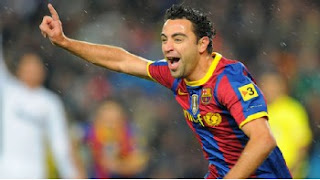
The man whose disyllabic moniker has become a byword for class is currently, without question, one of (if not the most) gifted midfielders in the world. Even if you only recently started watching football and tuned in for Barça’s showdown with Real Madrid mere months ago, it’d be difficult to say you weren’t incredibly impressed with the midfield magician’s performance. Xavi completed a La Liga season high 110 passes that night and notched the game’s opening and decisive goal on a deft flick past Iker Casillas after a whirlwind of passes torched the archenemy’s backline. It may have been a stellar showing, but it was just business as usual for Xavier Hernández.

Since the start of his career in 1998, he’s helped the club win five La Liga titles and two European Cups, and many feel he probably should have won the FIFA Ballon d'Or as the world’s best player in 2010 back in January.

Xavi may not be the flashiest player on the pitch. He may not be the fastest either. He doesn’t score as many goals as some of his teammates, and rarely is in the spotlight. But anyone who knows football will tell you that the man that wears number six on the back of his jersey is the most instrumental player on the pitch at any one time for Barcelona. Messi and Villa may score the goals, but Xavi sets them up with his astounding vision and his eye for precise passing with pinpoint accuracy. He is the calm and composed orchestrator of the midfield for the best football club on the planet. Without him, there would be no Barcelona, at least as we know them today, and his legend is still growing as we speak.

Thursday, December 30, 2010

Barcelona Transfer Targets: Top 10 Players Who Could Improve Barça in January


The term improvement is not one that is heard too often (if at all) these days around FC Barcelona’s Nou Camp. For the club that has won thirteen of their last fourteen matches, including the 5-0 shellacking of bitter rivals Real Madrid last week as well as a 19-0 combined score line over their last four opponents, amelioration, whenever it was initially sought after, has effectively been achieved by the Catalans, their newest goal being that of maintaining their recently attained two-point advantage over José Mourinho’s Blancos.

As they demonstrated in last Monday’s massacre of Real, which some are already calling the club’s best performance ever, Pep Guardiola’s squad cannot get much better. But as the old adage goes, there is always room for improvement, and with the winter transfer window looming, even the indomitable FC Barcelona may find themselves shelling out a few million more Euros on reinforcements to send an already impregnable team’s level of collective talent through the roof. They are, as follows, the top ten transfer targets that could improve Barcelona in January.

10. Emmanuel Adebayor

The wantaway striker has made only two Premier League starts this season for Manchester City and has been restricted primarily to Europa League appearances throughout the first half of this season; it has become almost a foregone conclusion that the Togolese will be sold this coming January.

While mercurial and sometimes difficult to manage, when on, Adebayor is one of the most menacing attackers around with his lightning pace and impressive finishing. Unfortunately, both of these qualities from which his name first began to grow have gone missing at Eastlands.

Therefore, a change of scenery could seriously benefit the troubled forward, and having been a former member or Arsenal, suiting up for Barcelona and playing the beautiful game in a way that Gunners manager Arsène Wenger can only dream of his team one day playing might ultimately rejuvenate Adebayor and give him an re-appreciation of football.

It’s unlikely that Barcelona will be heavy bidders (if bidders at all) for EA9, with Juventus looking like the striker’s most probable destination, but could you imagine a front line of Messi, Villa and a reinvigorated Adebayor? The rest of La Liga (and the world for that matter) will be wishing against its materialization.

9. Landon Donovan

The Los Angeles Galaxy center-forward finally made his mark on European soil last January during a 13-game loan spell at Everton that saw him bag two goals and spark to life a then dormant Toffees club.

Barcelona certainly doesn’t need any kind of a spark right now, but adding Donovan in January on-loan could make sense for the reigning La Liga champs. He is one of the smarter players around with a deft touch and an eye for the back of the net, playing with more a palpable passion than your average overpaid footballers (here’s looking at you, Cheslea).

The greatest American footballer in history is also a superb passer and would excel in the overly-possessive tactical system with which Barcelona torments its opponents. He is also far more intelligent and experienced than Pedro Rodríguez—whom Donovan would likely replace (at least as a substitute at times) in the starting XI—and would thrive in an exciting environment like the Nou Camp, where, just as at the U.S. National Team’s camp, winning, no matter how it’s achieved, is always emphasized over flair.

8. Wesley Sneijder

There was perhaps no human being (other than José Mourinho) more instrumental than the versatile Dutchman in guiding Inter past Barcelona in last year’s 3-2 aggregate Champions League semifinal victory (not to mention their historic treble). With a seemingly clairvoyant eye for the pass and the goal as well as a unique creativity that separates him from most attacking midfielders, the acquisition of the 26-year-old would immediately boost the likes of almost any club.

But the chief reason Sneijder would improve Barcelona is his missile of a right foot. If there was anything the second leg of last year’s UCL semifinal proved, it was that Barça were too dependent on their intricate passing game when it was repeatedly thwarted by the impermeable Inter backline. What became even more evident was that the Catalans lacked someone who could put the ball on target from distance; Sneijder could be that guy.

Although, watching Barcelona tear apart Real Madrid as they did on Monday night suggests their dearth of an outside sharpshooter is one of little to no concern nowadays at the Nou Camp. Sneijder also recently put pen to paper on a new five-year contract to keep him at the San Siro until 2015, so a move anywhere seems unlikely for Inter’s talisman. But you know he’d still love to stick it to Real Madrid—the team that wrote him off and let him go before his breakout campaign last year—and how best to do that than with Los Blancos’ biggest rivals?

7. Gareth Bale

Despite several clubs’ frequent inquiries about procuring his services, Tottenham boss Harry Redknapp has made explicit the fact that Bale is not for sale, and Spurs have reportedly slapped a £55 million price tag on the Welsh left-winger.

Ignoring his potential cost, Barcelona still seems like an unlikely destination for the man Redknapp has called the best player in English football, even if he became available, as a number Serie A clubs are rumored to be interested in securing his signature.

However, Bale is as industrious and workmanlike as they come and can finish with the best of them. Playing as a traditional left-footed player on the left wing has allowed him to maximize his talents and terrorize right backs across the globe—most notably Inter’s Maicon—in this year’s Champions League, and is a big reason why Tottenham have already punched their ticket to the knockout rounds.

On paper, he would undoubtedly be an upgrade over Pedro Rodríguez (who, thanks to my slideshow, is quickly becoming one of the most dispensable players at Barcelona) in the starting XI, but it’s impossible to predict how adapting to the Spanish game might effect Bale in the long run. Would he find the adjustment challenging and then see his fine form debilitate as a result? Or—an even scarier thought—would he become even better than he already is?

6. Ashley Cole

The only Barça player in the starting XI more dispensable than Pedro Rodríguez? How about left back Éric Abidal? The Frenchman who has scored just one goal (and not for Barcelona) at club level during his entire 12-year professional career, has been with the Catalans now since 2007 and has shared defensive duties with his backup Maxwell in recent months as he continues to age a little bit faster than some of his teammates. That’s not to take anything away from Abidal, as the former Lyon defender has been superb ever since joining Barcelona four years ago. The age factor is still difficult to ignore.

Abidal is now 31-years-old, and after succumbing to a muscle injury last February that kept him out nearly two months, it is becoming more and more evident that a permanent replacement for him may soon be in the cards.

Insert Cole.

At 29, though still not young by any means, the English international is a full two years younger than Abidal and, more significantly, is considered by many to be the best left back in the world. His current club Chelsea is presently enduring their worst run of form in recent memory but are still in the thick of things. So it isn’t likely the Blues would part with their dynamic flanker. But if they did, and Barcelona pounced, not only would the Catalans get a considerable defensive upgrade, but also simultaneously, they would stamp out Real Madrid and Mourinho who had been (and possibly still are) after Cole’s services this past summer.

5. David Luiz

A relative unknown in the grand scheme of things, Luiz would make a fantastic addition to the Barcelona backline, if only initially as a substitute.

A physical and imposing figure (6’ 2”) who features primarily as a center back, Luiz contributed significantly to his current club Benfica’s title-winning campaign in Portugal last season and has been the subject of many a transfer rumor these past few months.

While the defensive partnership of Gerard Piqué and Carles Puyol at center back looks set in stone for the time being, the latter is due to turn 33 this April. Barça may want to start considering its future in that department with talent more guaranteed than that of present backups Gabriel Milito, Maxwell or Adriano. David Luiz just might be the answer.

4. Edin Džeko

If you type his moniker into Google, the first thing to appear on the dropdown menu other than his full name is “Edin Džeko Transfer.”

The 24-year-old striker is still hanging around his current club Wolfsburg, but the feeling is that a move away from the German outfit is (and has been) imminent for the Bosnia and Herzegovina international. He has already bagged nine league goals for Wolfsburg this season, which is tied for third-best in the Bundesliga and would almost definitely play a big role wherever he might end up come January.

For the most part, Barcelona appear to be set up front with Villa and Messi, but adding Džeko and his near 6’4” frame to mix would supply the Blaugranes with another fiery attacking option as well as a viable aerial threat to help out Carles Puyol on corners. Barça should be wary of acquiring him, however, as this could be yet another Balkan cognomen whose promise fails to come to fruition.

Remember Zlatan Ibrahimović?

3. Fernando Llorente

Like Džeko, the Athletic Bilbao striker has been the subject of much transfer speculation in recent months. The only difference being that Llorente’s move away from the Basque Country is likely to take place within Spain as opposed to the rest of Europe. And that can only mean one thing—a transfer to Barcelona or Real Madrid.

The Pamplona-born forward has reportedly been linked with an eventual move to Real, and with Gonzalo Higuaín having recently suffered a back injury that will keep him out for several months, Llorente could find himself playing alongside CR7 much sooner than expected.

What a coup (and giant slap in the face, I might add) it would be for the Catalans if Barcelona were to swoop in and steal away the 25-year-old’s services, not to mention his towering 6’ 5” physique with which he has already begun to make his mark for the Spanish National Team as well as Athletic, having already bagged nine goals for the club this season.

2. Javier Pastore

Of all the players on this list, Pastore is without question the one most likely to join Barcelona via transfer this January.

The slender but explosive attacking midfielder has burst onto the scene this year for Palermo and has the Eagles within a point of Champions League qualification for next season, thanks to his seven goals and untouchable run of play.

At just 21-years-of-age, Pastore is only at the start of what looks to be an ever-bourgeoning, successful career, and it is only a matter of time before he is plucked from Palermo by a more lucrative club. The Argentina International has already been linked with a move to Barça, and only time will tell if Guardiola feels the need to reel in the youngster who exudes energy, zest and gusto—three essential qualities to being a member of the world’s greatest club.

1. Cesc Fàbregas

Any conversation about Barcelona transfer targets will invariably involve Cesc Fàbregas.

If you paid any kind of attention whatsoever to football this past summer, you would have heard his last name and Barcelona mentioned in the same sentence at least a hundred times—and that’s after hearing just ten sentences.

During the World Cup, it seemed like everyone but Fàbregas’s dentist was keen on his transfer to the club at which he grew up before he moved to Arsenal back in 2003. And, to be sure, the end result seems inevitable—Fàbregas will in fact at some point down the road move back to Barcelona.

The only question is when that will happen. But more importantly, in a midfield that consists of Xavier Hernández, Andrés Iniesta, Sergio Busquets, where will he play? The club reportedly wants him back, but finding a spot for him in the starting XI may prove to be more difficult than actually reacquiring his services.

Tuesday, November 30, 2010

El Clásico proves Barcelona and Real Madrid still a world apart

Many dubbed it the biggest club game in football history. With 209 meetings between the two sides that represent the political and cultural dichotomy prevalent throughout much of Spain, thirteen world champions on hand, the two most recent Ballon d'Or winners and the three most recent top scorers in the UEFA Champions League present, one club being just two points ahead of the other atop La Liga, and it being the most watched club football game on the planet other than the UEFA Champions League Final, the historic rivalry between Barcelona and Real Madrid had seldom received this much hype and buildup or felt more important.

Then came Monday night.

A cold, damp evening on the sodden pitch of the Nou Camp saw the 210th meeting between these two hated foes turn into a massacre of (somewhat) unexpected proportions as Barcelona thrashed visiting Real Madrid 5-0 to leapfrog Los Blancos and take the wheel as league leaders in Spain’s top-flight division.

We all know what happened, and in the aftermath of the destruction, as is typical in any big showdown between two heavyweights, pundits across the globe have been putting pen to paper (that expression is obsolete, but so be it) to tell their respective tales and opine about the more surprising storyline: Barça’s romp or Real’s whomp.

Ever since I was hired and agreed to come teach in Spain for a year at the end of this past spring, I had been looking forward to this match. Having only been to Barcelona once before when I was nine (and having partied a little too hard to remember it, apparently), I had planned on journeying up to Catalunya for the weekend and shelling out however many Euros it would take to get me inside Europe’s largest stadium to feast my eyes on the greatest rivalry in all of sports.

Let’s just say a weekend trip to Lisbon proved to be a bit less expensive than my venture to BCN might have been, and I figured since I’d be flying back from Cristiano Ronaldo’s former home to his new home, I’d still be able to catch some of the action on television in the Spanish capital.

Wrong again.

My bus from Madrid to Granada was scheduled to depart at 7:30 and arrive in Andalucía just after midnight, meaning I’d miss what was supposed to be the most exciting Clásico yet. My only hope was for my bus’s thirty-minute break to coincide with a piece of the action.

Luckily, it did.

The trip was one of the rockiest I had ever experienced via coach in my twenty-three years of existence, the light fixture above me that I needed to write things down was out, and my BlackBerry’s 3G network was having serious problems picking up a signal for most of the ride, but ultimately I managed to discover that Xavi and Pedro had found the back of the net and were sitting pretty at halftime 2-0 over Real. About fifteen minutes later the bus stopped. I walked into the bar and ordered a bocadillo de jamon y queso just as the second half was getting underway.

It didn’t take long for Barça to add insult to injury with a pair of David Villa strikes in the 55th and 58th minutes that doubled the home side’s lead over their rivals, who were lost in a sea of bewilderment and consternation. It was after the former Valencia forward’s second goal when I swallowed my last bite of baguette, cured meat, and olive oil, and headed back to the bus with several minutes to spare before the bus resumed its journey; I didn’t need to see anymore.

It should be noted that I am not a Real Madrid fan, so it’s not as if my emotions had been severely damaged by what I had just witnessed. To be fair, I appreciate the way Barcelona play, but am also a big fan of José Mourinho, the man in charge of the Catalan club’s most threatening opposition.

No, I left the bar because what I had seen in those three minutes had demonstrated to me what most of us already know: that football is a team game, and therefore, you win as a team.

One need only to have watched (or, eh-hem, seen the highlights of) Barcelona’s celebration after Xavi flicked the ball past Iker Casillas in the tenth minute for the game’s opening goal that sent the Nou Camp faithful into a thunderous uproar to confirm this notion, and catch a glimpse of Barcelona’s team-oriented mentality. After the talismanic midfielder ran wild down the goal line, there were no fewer than seven of his teammates in-tow, each one of them eager to pounce on their revered goal-scorer.

Barcelona’s possessive and meticulous style of play sold itself on this point. Intricate passing, perfectly-weighted through-balls, timely runs, composed finishing, and selfless play in general led to the demolition of (historically) Europe’s most successful club—their first defeat of the season and first under Mourinho, who was making his first return to the Nou Camp since April when he oversaw a defiant second-leg loss with Inter that still propelled the eventual champions to the UCL Final in Madrid 3-2 on aggregate.

After watching Barcelona’s bedazzling performance on Monday night, there will be many who will wonder exactly how Mourinho’s former squad managed to thwart the brilliant, disciplined tactical machine that is Pep Guardiola’s band of radiant technicians last season.

To be sure, the Special One’s new club most certainly does not lack quality. In fact, they still may be one of, if not the second-best team in Europe. But that term—team—is an ironic one for Real Madrid, because while they are one by default, it is clear that they are still light-years behind their rivals in instilling that team-first mentality on which Barcelona so prosperously thrives.

Mourinho clearly felt similarly, declaring in a post-match interview: “Barça is the finished article while Madrid is still a long way off that.”

The most telling tally in Barça’s emphatic destruction of Real on Monday night, however, must have been substitute Jeffrén Suárez’s stoppage time tap-in. A low cross from fellow sub Bojan Krkić to the Venezuelan-born winger, who slipped it past Casillas for the fifth and final goal of the evening, proved once again that at a club as great as Barcelona, even those players who are restricted to making mere cameo appearances are capable of on-pitch success thanks to the club’s seemingly impregnable tactical system.

For me, the current rivalry between these two clubs, which has now seen Barcelona capture five wins in the last five Clásicos, draws a curiously strong comparison to that of the Patriots and the Colts of the NFL—most notably during New England’s Super Bowl-winning years. It was the system employed by head coach Bill Belichick that enabled players like David Givens, Randall Gay, and even Randy Moss et al to maximize their talents and in turn help the team win game after game after game as a unit, while the Colts relied too heavily on quarterback Peyton Manning to do something about it (I’ll let you venture a wild guess as to which Real Madrid player is most closely associated with the four-time NFL MVP).


Granted, the Colts eventually found a formula that worked against the Patriots, and all of a sudden, they started winning games over their heated enemies. But will Real Madrid find a similar formula that enables them to finally return the favor and begin to conquer their now superior rivals once more?

Only time will tell as the next edition of this storied rivalry is slated for April, and Real will likely be playing catch-up until that point. There is of course no way of knowing where in the table Real and Barça will be come that date, but here is some parting advice for the future of Mourinho’s men in white when it comes to jousting with their neighbors from the northeast: invest more in an on-field philosophy based on tactics and teamwork as opposed to an off-field philosophy based on club President Florentino Pérez’s checkbook; it hasn’t won them a Clásico (much less a title) since it was activated...again.